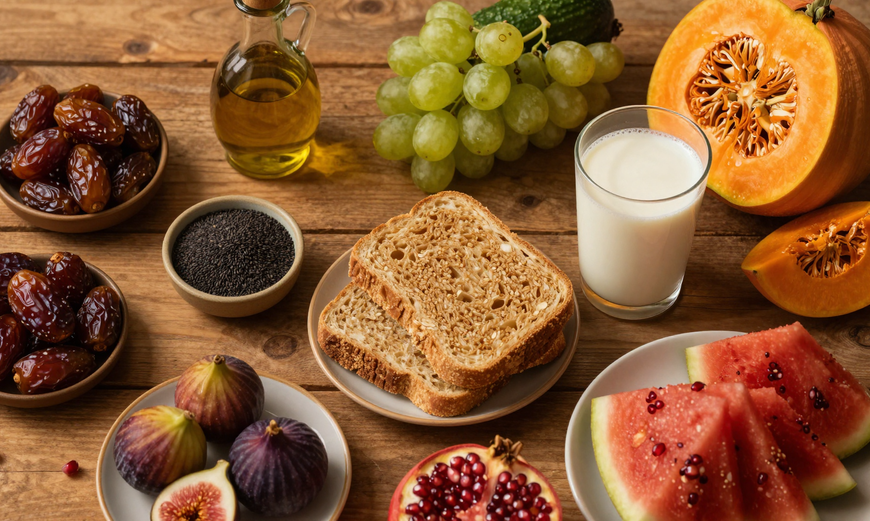
Sunnah Foods: Complete Sunnah Food List and Benefits
We're Eating All Wrong — And Deep Down, We Know It
Processed snacks at 2 AM. Fast food between Dhuhr and Asr. Sugary drinks we reach for without thinking. Sound familiar?
Modern life has done something strange to us — it's made us forget one of the most beautiful gifts Allah gave us: the Sunnah way of eating.
Over 1,400 years ago, Prophet Muhammad ﷺ lived with a simplicity that modern nutritionists are only now beginning to understand. He ate with intention. He ate with gratitude. And he ate foods that — as it turns out — science is now calling some of the healthiest on earth.
So what exactly are these foods? And how can you bring them into your daily life?
That's exactly what we're going to explore in this guide. Whether you're completely new to the Prophetic diet or you've been curious for a while, consider this your warm, friendly welcome into one of the most beautiful aspects of Islamic lifestyle.
What Are Sunnah Foods?
Simply put, Sunnah foods are foods that the Prophet Muhammad ﷺ ate, recommended, or praised — either through his actions or through authentic narrations (hadith). For a detailed guide on authenticating narrations, you can refer to hadith grading resources online.
The word Sunnah refers to the way of the Prophet ﷺ — his habits, his practices, his lifestyle. And yes, that includes what he put on his plate.
These are not complicated superfoods you need to order online from some distant country. Most of them are humble, affordable, and timeless — dates, honey, olive oil, black seed, barley. Things you can find at any grocery store.
What makes them special is the blessing behind them. When you eat a date and remember that the Prophet ﷺ loved it, something shifts. That small moment of mindfulness? That's ibadah. That's worship.
Why Sunnah Foods Matter in Islam
The Spiritual Connection
Food isn't just fuel in Islam. It carries meaning.
When you choose Sunnah foods to eat, you're not just making a healthy choice — you're following a way of life that Allah's most beloved ﷺ demonstrated for us. There's a special kind of barakah (blessing) in that.
The Prophet ﷺ said: "Eat together and not separately, for the blessing is associated with the company." (Ibn Majah)
Even the act of eating together, eating from what is good and halal, is an act of worship when done with the right intention. For more on Islamic eating etiquette, check out this guide to Islamic manners.
The Health Connection
Here's the beautiful thing — what the Prophet ﷺ recommended centuries ago, modern science is confirming today.
Black seed has been studied for its antimicrobial properties. Honey has been used in wound healing. Dates are packed with natural sugars, fiber, and minerals. Olive oil is linked to heart health. This isn't coincidence — it's divine wisdom.
The Simplicity of the Prophetic Diet
The Prophet ﷺ never overate. He famously said: "The son of Adam never fills a vessel worse than his stomach. It is sufficient for the son of Adam to have a few bites to keep him going, but if he must (fill his stomach), then let it be one-third for food, one-third for drink, and one-third for air." (Tirmidhi — Hasan)
Simple. Light. Intentional. That's the Prophetic diet in a nutshell.
Complete Sunnah Food List
This is the heart of our guide. Below is a detailed look at the most well-known sunnah foods, their Islamic significance, and what nutritional science says about them.
🌴 1. Dates (Tamr)
Dates might just be the most iconic of all Sunnah foods. The Prophet ﷺ broke his fast with dates. He recommended starting the morning with them. He even said:
"Whoever has seven 'Ajwah dates every morning, will not be affected by poison or magic on that day until the evening." (Bukhari)
That's a remarkable statement — and while we believe in the blessing of following the Sunnah, modern research has also found dates to be rich in potassium, magnesium, antioxidants, and natural fiber.
Why eat them?
-
Natural energy boost without a sugar crash
-
Supports digestion
-
Great pre-fast or iftar food
-
Connected to countless prophetic narrations
🍯 2. Honey (Asal)
Allah mentions honey directly in the Quran:
"There comes forth from their bellies a drink of varying colors, in which there is healing for people." (An-Nahl 16:69)
The Prophet ﷺ also said: "Make use of the two remedies: honey and the Quran." (Ibn Majah)
Raw honey is antibacterial, anti-inflammatory, and packed with enzymes and antioxidants. For centuries, it's been used in traditional medicine across cultures — but Muslims were ahead of the curve. You can read more about raw honey benefits on PubMed.
Why eat it?
-
Soothes sore throats
-
Supports gut health
-
Natural wound healer
-
Mentioned in both Quran and Hadith
🌿 3. Black Seed (Habbatus Sauda)
Perhaps no Sunnah food comes with a more powerful recommendation than black seed.
The Prophet ﷺ said: "Use this black seed regularly, because it is a cure for every disease except death." (Bukhari & Muslim)
Black seed (Nigella sativa) has been studied extensively. Researchers have found it contains thymoquinone, a compound with antioxidant, anti-inflammatory, and antimicrobial properties. For scientific studies, see this research on black seed.
Why eat it?
-
Immune system support
-
Anti-inflammatory properties
-
Respiratory health
-
Mentioned in the most authentic hadith collections
🫒 4. Olive Oil (Zayt)
The Prophet ﷺ said: "Eat olive oil and anoint yourselves with it, for it comes from a blessed tree." (Tirmidhi)
And Allah calls the olive tree "blessed" in the Quran (An-Nur 24:35). Olive oil is the cornerstone of the Mediterranean diet — one of the most studied and praised diets in the world. Learn more from the Harvard T.H. Chan School of Public Health on olive oil.
Why eat it?
-
Heart-healthy monounsaturated fats
-
Reduces inflammation
-
Linked to lower risk of chronic disease
-
Praised in both Quran and Sunnah
🥛 5. Milk
The Prophet ﷺ loved milk and often drank it. He said: "Whoever Allah gives food, let him say: 'O Allah, bless it for us and give us better than it.' And whoever is given milk to drink, let him say: 'O Allah, bless it for us and give us more of it.'" (Tirmidhi)
After his night journey (Isra wal Mi'raj), the Prophet ﷺ was offered milk and wine — and he chose milk. Jibreel (AS) told him he had chosen the fitrah (natural disposition).
Why drink it?
-
Rich in calcium and protein
-
Supports bone health
-
One of the Prophet's ﷺ preferred drinks
🌾 6. Barley (Sha'eer)
Barley bread was a staple in the Prophet's ﷺ household. In fact, the Prophet ﷺ and his family sometimes went days eating only barley bread and water. And yet — they were among the most spiritually alive people who ever walked this earth.
The Prophet ﷺ recommended barley water (talbina) for the sick and grieving: "Talbina soothes the heart of the sick person and takes away some of his sorrow." (Bukhari)
Why eat it?
-
High in fiber and beta-glucan
-
Supports heart health and blood sugar
-
The grain of the Prophetic household
🍈 7. Figs (Teen)
Allah swears by figs in the Quran — and that alone tells you how significant they are:
"By the fig and the olive." (At-Teen 95:1)
Figs are one of nature's most nutrient-dense fruits — loaded with fiber, calcium, potassium, and antioxidants.
Why eat them?
-
Supports digestive health
-
High in natural calcium
-
Honored in the Quran itself
🍇 8. Grapes (Inab)
Grapes are mentioned multiple times in the Quran, often in the context of paradise and blessing. The Prophet ﷺ also enjoyed them. Fresh grapes, raisins — both were common in the Prophetic household.
Why eat them?
-
Rich in antioxidants (including resveratrol)
-
Natural energy source
-
Mentioned repeatedly in the Quran
🍉 9. Watermelon (Batikh)
Yes, watermelon is a Sunnah food! The Prophet ﷺ used to eat watermelon with fresh dates, combining the cold nature of watermelon with the warmth of dates to achieve balance.
Aisha (RA) narrated: "The Prophet ﷺ used to eat watermelon with fresh dates." (Abu Dawud, Tirmidhi)
Why eat it?
-
92% water — excellent for hydration
-
Rich in lycopene and vitamin C
-
A genuine Sunnah food with prophetic precedent
🍶 10. Vinegar (Khall)
This one surprises people! But yes — the Prophet ﷺ praised vinegar.
He said: "What a good condiment vinegar is!" (Muslim)
Apple cider vinegar in particular has gained modern attention for its potential benefits in digestion and blood sugar regulation. See WebMD's overview on apple cider vinegar.
Why use it?
-
Supports digestion
-
Natural food preservative
-
Praised by the Prophet ﷺ directly
🍎 11. Pomegranate (Rumman)
The Quran mentions pomegranates as one of the fruits of paradise (Al-An'am 6:99, 6:141; Ar-Rahman 55:68). The Prophet ﷺ is also reported to have said that pomegranate cleanses the stomach.
Why eat it?
-
Extremely high in antioxidants
-
Supports heart health
-
A fruit of Jannah — what more do you need?
🥒 12. Cucumber (Qiththa)
Cucumbers were among the Prophet's ﷺ favorite foods. He was reported to eat them with dates as well, combining what was cooling with what was warm.
Why eat it?
-
High water content — hydrating and cooling
-
Supports skin health
-
A simple, affordable Sunnah food
🎃 13. Pumpkin / Gourd (Qar')
Anas ibn Malik (RA) narrated: "A tailor invited the Prophet ﷺ to eat food he had prepared. I went with the Prophet ﷺ... I saw him going after the gourd around the dish, so I have always liked gourd since that day." (Bukhari & Muslim)
The Prophet ﷺ loved pumpkin/gourd so much that companions noticed and followed his lead.
Why eat it?
-
Rich in vitamin A and fiber
-
Low in calories, high in nutrients
-
A food the Prophet ﷺ actively sought out
Best Sunnah Foods to Eat Daily
Knowing the list is one thing. Actually bringing these into your daily life is another. Here's a practical approach — simple, doable, and deeply connected to Sunnah.
🌅 Morning (Start Your Day the Prophetic Way)
-
7 Ajwah dates — following the narration in Bukhari
-
A glass of warm milk or water with honey — light, nourishing, and blessed
-
A pinch of black seed — in honey or on its own
The Prophet ﷺ reportedly said not to skip the morning meal. Even something small is better than nothing.
⚡ For Energy During the Day
-
Dates + water — instant natural energy, no crash
-
A handful of raisins — portable, sweet, and Sunnah-approved
-
Olive oil on bread — simple, filling, and full of heart-healthy fats
🌿 For Digestion
-
Talbina (barley porridge) — especially recommended when feeling unwell or heavy
-
Vinegar as a condiment — add it to salads or dips
-
Cucumber — cooling and hydrating for the gut
🍽️ Simple Sunnah Meal Ideas
Breakfast: Dates + warm milk + a drizzle of honey
Lunch: Barley bread or whole grain with olive oil, cucumber salad with vinegar dressing, pomegranate seeds on the side
Dinner: Light vegetable soup with pumpkin, a small portion of bread, fresh figs or grapes as dessert
Snack: Watermelon in summer, raisins any time of year
None of this is complicated. None of it is expensive. It's simple, wholesome, and full of barakah.
Sunnah Foods Mentioned in Hadith
One of the things that makes sunnah foods so trustworthy is that they come from the most authenticated sources in Islam — the Sahih collections of Bukhari and Muslim, as well as Tirmidhi, Abu Dawud, and Ibn Majah. You can search these narrations at Sunnah.com.
Here are a few hadith that specifically mention prophetic foods:
On Dates:
"A house that has dates will not have its people go hungry." (Muslim)
On Honey:
"Healing is in three things: a gulp of honey, cupping, and branding with fire (cauterizing). But I forbid my followers to use branding." (Bukhari)
On Black Seed:
"In the black seed is healing for every disease except death." (Bukhari)
On Talbina (Barley Porridge):
"You should eat talbina, for it is beneficial for the heart and it removes some of the sorrow." (Bukhari)
On Olive Oil:
"Eat the olive oil and use it on your hair and skin, for it comes from a blessed tree." (Tirmidhi)
These narrations aren't just historical footnotes. They're living guidance — wisdom passed down through an unbroken chain directly from the Prophet ﷺ to us.
Sunnah Foods — Quick Reference Table
| Food | Mentioned In | Key Benefits |
|---|---|---|
| Dates | Bukhari, Muslim, Tirmidhi | Natural energy, digestive fiber, minerals |
| Honey | Quran (16:69), Bukhari | Antibacterial, anti-inflammatory, healing |
| Black Seed | Bukhari, Muslim | Immune support, antimicrobial, anti-inflammatory |
| Olive Oil | Tirmidhi, Quran (24:35) | Heart health, anti-inflammatory, skin care |
| Milk | Tirmidhi, Bukhari | Calcium, protein, bone strength |
| Barley | Bukhari, multiple sources | Fiber, blood sugar support, heart health |
| Figs | Quran (95:1) | Digestive health, calcium, antioxidants |
| Grapes | Quran (multiple verses) | Antioxidants, natural sugars, energy |
| Watermelon | Abu Dawud, Tirmidhi | Hydration, lycopene, vitamin C |
| Vinegar | Muslim | Digestion, blood sugar, food preservation |
| Pomegranate | Quran (55:68, 6:99) | Antioxidants, heart health, anti-inflammatory |
| Cucumber | Prophetic narrations | Hydration, cooling, skin health |
| Pumpkin/Gourd | Bukhari, Muslim | Vitamin A, fiber, low calorie |
Frequently Asked Questions (FAQs)
What are Sunnah foods?
Sunnah foods are foods that the Prophet Muhammad ﷺ ate, recommended, or praised during his lifetime. They are based on authentic hadith narrations and include foods like dates, honey, black seed, olive oil, barley, figs, pomegranate, and more. Following a Sunnah-based diet is both a spiritual practice and a healthy lifestyle choice. For a beginner’s guide, see this article on Islamic nutrition.
Which Sunnah food is the healthiest?
This is a beautiful question — because each Sunnah food has its own unique strengths. However, black seed and honey are often considered among the most medicinally powerful, given the remarkable prophetic hadith about them. Dates are perhaps the most practically beneficial for daily life, given their nutritional profile and the specific prophetic guidance around eating seven in the morning.
Did Prophet Muhammad ﷺ eat dates daily?
Yes! Multiple authentic hadith confirm that the Prophet ﷺ broke his fast with dates, ate them in the morning, and highly encouraged their consumption. He even specifically praised Ajwah dates from Madinah, saying that whoever eats seven of them in the morning will be protected from poison and magic that day (Bukhari).
What foods are mentioned in the Quran?
Several foods are mentioned directly in the Quran, including: olive (At-Teen 95:1, An-Nur 24:35), fig (At-Teen 95:1), pomegranate (Ar-Rahman 55:68, Al-An'am 6:99), grapes (multiple verses), milk (An-Nahl 16:66), honey (An-Nahl 16:69), and dates/palm trees (multiple verses). These foods are blessed not just by prophetic recommendation but by divine mention in the Quran itself. You can read the Quran online at Quran.com.
Are Sunnah foods healthy?
Yes — remarkably so. Modern nutritional science has repeatedly confirmed the health value of Sunnah foods. Dates are rich in fiber and minerals. Honey is antibacterial. Black seed contains thymoquinone with anti-inflammatory properties. Olive oil supports heart health. What the Prophet ﷺ recommended 1,400 years ago continues to be validated by scientific research today. This is among the many signs of the divine wisdom embedded in Islamic teachings.
How do I start eating Sunnah foods?
Start small and be consistent. Add dates to your morning routine. Swap refined sugar for honey in your tea. Cook with olive oil instead of processed vegetable oils. Try barley porridge when you're feeling unwell. You don't need to overhaul your entire diet overnight — even one Sunnah food eaten with intention and remembrance of the Prophet ﷺ is a beautiful beginning.
Conclusion: Small Steps, Infinite Barakah
If you've made it this far, something in this guide has touched you — and that's not an accident.
The Sunnah isn't a burden. It's a gift. A roadmap left behind by the most perfect human being who ever lived, covering everything from how to greet your neighbor to what to eat for breakfast.
You don't have to change everything overnight. Start with one date in the morning. Drizzle olive oil on your bread. Add a spoonful of honey to your tea. These tiny acts — done with intention, done with love for the Prophet ﷺ — carry more weight than we can imagine.
Every time you reach for a Sunnah food, you're saying: I choose his way. I choose the blessed path.
And that small choice? It's the beginning of a life more connected to Allah, to the Sunnah, and to yourself.
May Allah bless us all with tawfiq to follow the Sunnah in every aspect of our lives — including what we eat.
Ameen.